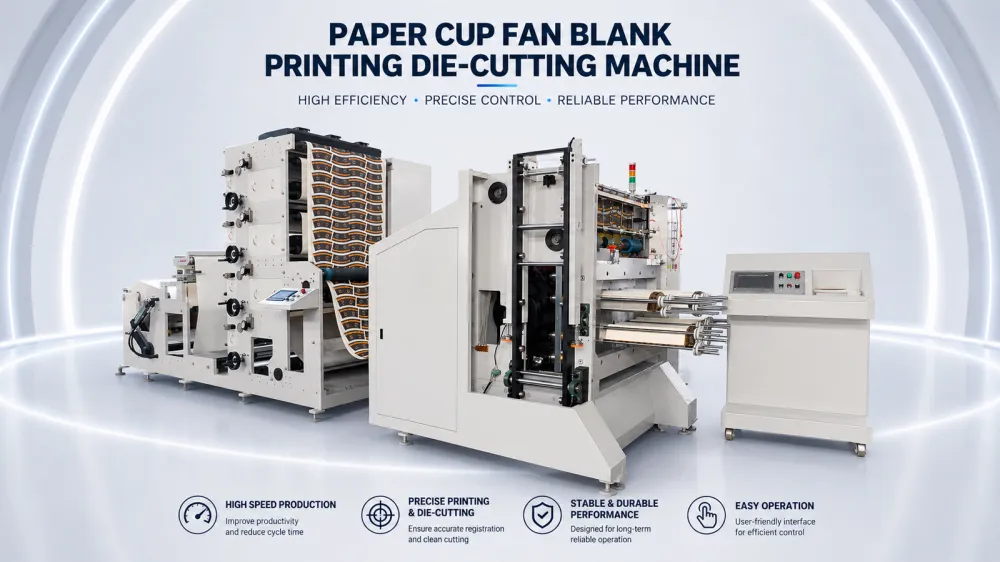
How to Vet a Chinese Flexo Press Factory: A Checklist for Professional Agents
As an industrial machinery distributor, your reputation is your most valuable asset. Partnering with the wrong factory doesn't just result in a lost sale; it leads to a "Service Trap" where your engineers spend months fixing a low-quality machine, draining your margins and destroying your client relationships.
Low prices in China often mask significant shortcuts in engineering. To protect your business in 2026, you need a vetting process that goes deeper than a simple PDF brochure. Here is the professional agent’s checklist for auditing a Chinese flexo press manufacturer.
1. Transparency of the Bill of Materials (BOM)
A machine is only as reliable as its weakest component. Many small factories use "no-name" domestic electronics to lower costs. A professional agent should demand a Full BOM Transparency.
- Critical Components: Are the PLC, servo drives, and inverters from global brands like Siemens, Schneider, or Mitsubishi? These are easier for you to service locally.
- Mechanical Parts: Ask for the brand of the bearings (e.g., NSK/FAG) and the grade of the steel used for the main frames. Heavy-duty cast iron frames (not thin welded sheets) are essential for vibration-free printing.
2. The "Shop-Floor" Audit: Assembly Standards
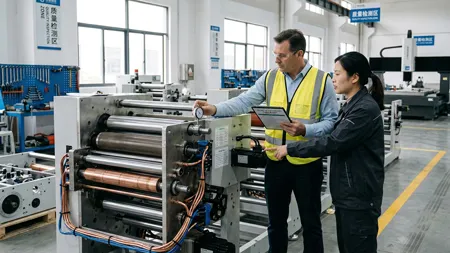
Precision is born on the assembly floor, not in the sales office. If you cannot visit the factory in Wenzhou in person, request a live video tour of the CNC machining center.
- Gantry Machining: Does the factory machine their own frames on a large-scale CNC gantry? This ensures the parallelism of the rollers, which is the "DNA" of registration accuracy.
- Static and Dynamic Balancing: Ask for proof of roller balancing. A roller that isn't perfectly balanced will cause "ghosting" and streaks at high speeds, which is a nightmare for your technicians to fix.
3. After-Sales Infrastructure: The "Service Gap"
Most Chinese factories claim to have "Global Service," but few can deliver. You need to know exactly what happens when a machine goes down at 2 AM in your time zone.
- Language Capability: Does the technical team speak English? Direct communication between your engineers and the factory's designers is vital.
- Wear Parts Inventory: Does the factory provide a "Startup Spare Parts Kit"? A professional partner like Wenzhou Henghao ensures that critical wear parts (seals, sensors, blades) are always in stock for 24-hour dispatch.
4. Protection of Regional Interests
The biggest fear for an agent is the "Direct Sales Conflict." You spend years developing a lead, only for the factory to bypass you and sell directly to the customer.
"A sustainable partnership is built on clear boundaries. Look for manufacturers that offer formal Exclusive Agency agreements and a transparent lead-protection policy."
Distributor Partnership FAQ
Q: What is the typical lead time for a custom stack-type flexo press?
A: For a professional setup with inline converting, expect 45 to 60 days. Anything faster usually means the factory is rushing the testing phase or using pre-assembled, low-spec frames.
Q: Can Henghao provide private labeling (OEM) for our local brand?
A: Yes. We work with several large distributors worldwide, providing custom colors, localized PLC interfaces (Spanish/Portuguese), and OEM branding, provided the agent meets the annual volume commitment.
Q: How do you handle remote commissioning during travel restrictions?
A: We provide high-definition installation videos and 1-on-1 live training sessions via Zoom/WhatsApp. For complex lines, we can send engineers for on-site commissioning once the machine arrives at your client's facility.
Conclusion: Finding a Partner, Not Just a Supplier
In the machinery business, you don't buy a machine; you buy a 10-year relationship. If a factory competes only on price, they will inevitably cut corners on the support you need to succeed.
Looking to expand your portfolio with a reliable Chinese partner?
Contact our Global Partnership Manager at Wenzhou Henghao Machinery today. Let’s review our technical standards and discuss how we can protect and grow your local market share together.
Share this article: