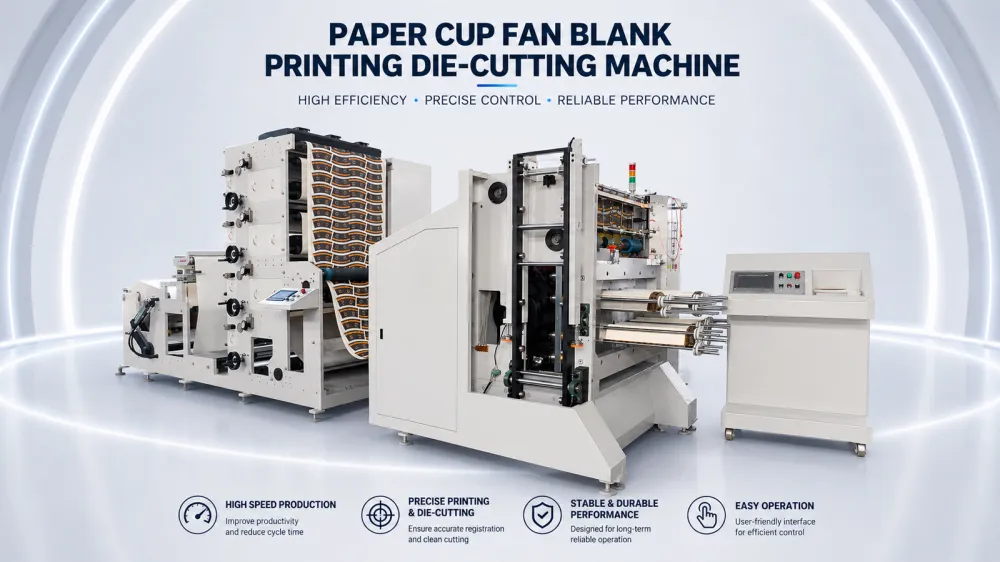
Flexo Printing Machine Price: Cost Factors & Buyer Guide 2026
How Much Does a Flexo Printing Machine Cost?
There is no single fixed price for a flexo printing machine because the final quotation depends on what the machine must print and how it must produce it. Machine type, web width, number of colors, speed, drive system, drying, tension control, automation and inline converting can all change the investment.
As a reference for Henghao's configurable Stack and Inline flexo solutions, the current investment range is typically around USD 30,000–200,000+. This is a configuration reference rather than a universal market price; the final quotation depends on the actual production requirement.
Why Can Flexo Printing Machine Prices Be So Different?
Two machines called a "flexo printing machine" may be designed for completely different jobs. A basic Stack press for paper products cannot be compared directly with an automated Inline label press or an industrial CI press for flexible packaging.
| Machine Direction | Typical Applications | General Investment Position | Main Cost Drivers |
|---|---|---|---|
| Stack Flexo | Paper, paper bags, paper cups, labels and selected roll materials | Entry to medium, depending on configuration | Width, colors, speed, drying and web handling |
| Inline / Unit Type | Labels, paper products and applications requiring inline converting | Medium to higher depending on automation | Print stations, servo control, UV/IR drying and converting units |
| CI Flexo | Flexible packaging and stretch-sensitive films | Generally higher capital investment | Central drum, drive system, width, automation and high-speed web control |
Choose the machine architecture from the application first, then compare prices within that machine category. Comparing quotations from different architectures can create a misleading view of what is "cheap" or "expensive."
What Factors Affect Flexo Printing Machine Price?
Price follows configuration. Before comparing quotations, understand which specifications are increasing the machine cost and whether you actually need them.
1. Number of Printing Colors
Each additional printing station requires more mechanical, ink-transfer, drying and control components. A 6-color or 8-color machine will therefore normally require a higher investment than a simpler 2-color or 4-color configuration.
Do not buy additional colors only because they may be useful someday. Review your current artwork and realistic future jobs before deciding.
2. Printing and Material Width
A wider press requires larger rollers, shafts, frames, drying capacity and web-handling components. This increases both equipment cost and factory-space requirements.
Specify both material width and required printing width when requesting a quotation.
3. Substrate and Tension Requirements
Paper, PE-coated paper, self-adhesive materials and plastic films do not behave the same way through a press. Material thickness, stretch characteristics and surface properties affect tension control, drying and other machine requirements.
A machine that can physically feed a material is not automatically optimized to print it well.
4. Production Speed
Higher rated speed can require more capable drives, tension control, drying, registration and unwinding/rewinding systems.
However, maximum rated speed should not be the only purchasing target. Stable production speed, setup time, waste, changeovers and saleable output determine how much usable production the machine actually delivers.
5. Drive and Automation Level
Servo drives, automatic registration, advanced tension control and other automation can increase the initial machine price while reducing manual adjustments or improving production consistency for suitable jobs.
The right automation level depends on production volume, job changes, operator experience and the cost of waste or downtime.
6. Drying or Curing System
The required drying system depends on the ink, substrate, printing speed and application. Hot air, IR and UV configurations have different equipment and operating requirements.
Specify the intended ink and material before selecting the drying configuration.
7. Inline Converting Functions
A flexo press may be configured with functions such as die cutting, slitting, sheeting, laminating or cold stamping, depending on the product and machine platform.
These options increase machine investment but may also remove separate production steps. Evaluate them from the complete workflow rather than treating every option as necessary.
Start With the Finished Product Before Setting Your Budget
The same budget should not be applied to every flexographic printing application. Start with what you need to manufacture and work backward to the machine configuration.
| Finished Product | Important Inputs | Price-Sensitive Configuration |
|---|---|---|
| Self-Adhesive Labels | Material, width, colors, run length and finishing | Printing stations, drying, servo control and die cutting |
| Paper Cups | PE-coated paper, GSM, width, colors and downstream process | Width, drying, registration and optional inline processing |
| Paper Bags / Kraft Paper | Paper GSM, width, colors and production volume | Web width, print stations, drying and rewinding |
| Flexible Packaging Film | Film type, thickness, width, colors and quality target | Tension control, drying, drive architecture and registration |
Buyers who are still defining the machine can review Henghao's Flexo Printing Machines to compare available configurations by application.
Machine Price Is Not the Same as Project Cost
A quotation for the press itself may not represent the total amount required to put the machine into production. Check what is included and excluded before comparing suppliers.
| Cost Item | What Buyers Should Confirm |
|---|---|
| Base Machine | Exact printing configuration and standard equipment |
| Tooling | Printing cylinders, plate cylinders, anilox rolls and required tooling |
| Optional Units | Inspection, die cutting, slitting, sheeting, laminating or other functions |
| Freight | Shipping terms, destination and transport scope |
| Installation & Training | Whether commissioning, technician travel and operator training are included |
| Initial Spare Parts | Recommended wear parts and replacement components |
| Prepress & Consumables | Plates, inks and other production inputs required for your workflow |
How Should You Compare Two Flexo Machine Quotations?
Do not compare only the final USD amount. First normalize the technical scope so that both suppliers are quoting a machine capable of doing the same job.
- Same substrate and thickness / GSM
- Same material and printing width
- Same number of printing colors
- Comparable speed requirement
- Comparable tension and registration control
- Same drying or curing requirement
- Same inline converting functions
- Same tooling and accessories scope
- Comparable installation, training and warranty scope
A cheaper quotation may simply include less equipment. Ask suppliers to clearly separate standard equipment, optional equipment and items excluded from the quotation.
Look Beyond Purchase Price: What Affects TCO?
Total Cost of Ownership (TCO) helps buyers compare machines that have different purchase prices but also different operating requirements.
A practical framework is:
TCO = Machine Investment + Installation + Tooling + Operating Costs + Maintenance + Downtime-Related Costs
The inputs are project-specific. Important variables can include:
- Substrate waste during setup and production
- Operator requirements
- Ink and consumables
- Drying or curing energy
- Routine maintenance and wear parts
- Job changeover time
- Unplanned downtime
Do not calculate ROI from rated machine speed alone. Use stable operating speed, effective running time and saleable output from your actual job mix wherever possible.
When Is a Higher-Priced Flexo Press Worth Considering?
Paying more can make sense when the additional configuration solves a measurable production constraint.
| Production Situation | Higher Investment May Be Justified By |
|---|---|
| Frequent job changes | Faster setup and automation |
| Expensive substrate | Better control of startup and registration waste |
| Higher output requirement | Stable production capacity and suitable drying |
| Thin or difficult material | More appropriate tension and web control |
| Multiple converting steps | Suitable inline processing where it improves workflow |
More automation is not automatically better. If your jobs are simple, volumes are moderate and changeovers are infrequent, paying for functions you rarely use can increase capital cost without creating equivalent production value.
What Information Is Needed for an Accurate Flexo Machine Price?
For a useful quotation, send the manufacturer enough information to configure the machine around the actual job:
- Finished product: label, paper cup, paper bag, flexible packaging or another product
- Substrate: material type, thickness or GSM
- Width: material width and required printing width
- Colors: current artwork and realistic future requirements
- Print repeat: required repeat range where applicable
- Production: typical order quantity and expected output
- Ink / drying: if already defined
- Converting: die cutting, slitting, sheeting, laminating or other processes
- Destination: country and relevant electrical requirements
If you do not know the machine specification, send the finished product first. A sample, clear product photo, substrate information or artwork can help define the remaining technical questions before a quotation is prepared.
Flexo Printing Machine Price FAQ
Why Don't Flexo Printing Machines Have One Fixed Catalog Price?
Because most industrial flexo presses are configured around the application. Width, colors, substrate, speed, drying, drive system, automation and converting options can change both machine design and final price.
Does a 6-Color Flexo Machine Always Cost More Than a 4-Color Machine?
When the rest of the configuration is comparable, additional print stations normally increase cost. However, color count alone cannot be used to compare two different press architectures or automation levels.
Is a Used Flexo Press Always Cheaper Than a New Machine?
The purchase price may be lower, but buyers should also evaluate machine condition, remaining service life, control-system age, spare-parts availability, required refurbishment, installation and whether the press can meet current production requirements.
What Is the Fastest Way to Get a More Accurate Quotation?
Send the substrate, width, number of colors, finished product, artwork or sample, production target and required converting functions. The more clearly the application is defined, the easier it is to avoid unnecessary options or an under-specified machine.
Conclusion
Flexo printing machine price is primarily a configuration question. Machine architecture, substrate, web width, colors, production requirements, drying, automation and converting functions determine what equipment is actually required.
Instead of comparing headline prices, define the finished product first, request equivalent technical configurations from shortlisted suppliers, check what each quotation includes, and then evaluate both initial investment and operating cost.
Share this article: