BOPP Label Printing Machine: Flexo Printer Buyer's Guide
What Machine Is Used to Print BOPP Labels?
BOPP labels can be printed on a flexographic label press configured for film handling, stable web tension, suitable ink and drying or curing, accurate registration, and the required downstream converting process.
Do not choose the machine from the term “BOPP” alone. Before comparing presses, define the actual BOPP material, web width, label size, number of colors, artwork, ink system, finished label format and whether die cutting or other inline converting is required.
For buyers, the key question is not simply “Can this machine print BOPP?” but “Can this configuration handle my BOPP label job reliably?”
What Is a BOPP Label Printing Machine?
A BOPP label printing machine is typically a label printing press configured to print BOPP film or BOPP-based label materials. In flexographic production, the substrate is fed from a roll through printing stations and then dried or cured before rewinding or further converting.
It is more useful to think of the equipment as a flexo label press configured for the actual film and finished label rather than as a completely separate machine category used only for BOPP.
BOPP = Biaxially Oriented Polypropylene. For machine selection, however, the material name is only the starting point. Surface condition, thickness, roll specification, ink requirements and finished-label workflow also need to be confirmed.
How Does Flexographic BOPP Label Printing Work?
A typical roll-to-roll flexographic workflow can be simplified as:
Ink is transferred through the flexographic printing system onto the moving web. For multi-color jobs, each printing station adds the required color while registration control helps maintain color-to-color alignment.
Depending on the finished product, the line may also include varnishing, laminating, die cutting, slitting or other converting functions. These are application-dependent options rather than mandatory stages for every BOPP label job.
Why Is Printing BOPP Different From Printing Paper Labels?
Film and paper behave differently on press. A configuration that runs paper labels successfully should not automatically be assumed to handle every BOPP film under the same settings.
| Factor | BOPP / Film Labels | Why It Matters |
|---|---|---|
| Web Tension | Requires control matched to the film and roll | Unstable tension can affect feeding, registration and rewinding. |
| Surface Condition | Ink adhesion depends on the actual printable surface | Surface treatment and material condition should be confirmed before production. |
| Ink System | Must match the substrate and application | Ink choice affects adhesion, drying or curing and final print performance. |
| Drying / Curing | Selected according to the ink and press configuration | Incorrect settings can affect print quality and production stability. |
| Heat | Needs to be considered with film behavior | Drying conditions should be compatible with the actual substrate. |
| Registration | Important for multi-color film printing | Stable web transport supports consistent color alignment. |
Buyer check: Do not approve a machine only because the specification says “BOPP compatible.” Ask the supplier to evaluate the actual material, roll specification, printing artwork, ink system and finished-label process.
What Should You Check for Ink Adhesion and Drying?
Good BOPP printing depends on the interaction between the film surface, ink system and drying or curing configuration. These three factors should be evaluated together.
1. Confirm the Actual BOPP Material
Ask for the material specification rather than relying only on the word “BOPP.” If possible, provide the machine supplier with the actual roll material or a technical data sheet before finalizing the press configuration.
2. Check the Printable Surface
Film surface condition can affect ink adhesion. Whether additional surface treatment is required depends on the material supplied, its existing treatment level, storage condition and the ink system being used.
3. Match Ink With the Application
The ink system should be selected according to the substrate, printing requirements and end use. Do not assume that one ink system is appropriate for every BOPP label application.
4. Match Drying or Curing to the Ink
Drying or curing requirements should be confirmed together with the selected ink. The objective is stable production and suitable print performance without applying unnecessary thermal load to the film.
What Machine Specifications Matter Most for BOPP Labels?
Compare machine quotations against the actual job specification rather than comparing only the number of colors or maximum rated speed.
| Machine Requirement | What the Buyer Should Provide | Why It Matters |
|---|---|---|
| Web Width | Material roll width and finished label layout | Determines the required machine width. |
| Printing Colors | Artwork or representative label samples | Determines the required number of printing stations. |
| Web Tension | Film type, thickness and roll specification | Supports stable feeding, printing and rewinding. |
| Ink System | Ink preference and end-use requirements | Affects ink transfer, adhesion and drying or curing. |
| Drying / Curing | Ink system and target production conditions | Must be matched to both ink and substrate. |
| Registration | Artwork and print-quality requirements | Important for multi-color label designs. |
| Die Cutting | Finished label shape and delivery format | Determines whether inline converting is required. |
| Rewinding | Required finished roll specification | Affects downstream converting, inspection or customer use. |
Can One Flexo Press Print BOPP, PET, PE and Paper Labels?
A flexo label press can potentially handle multiple substrates, but compatibility must be checked against the actual materials and jobs.
BOPP, PET, PE, PVC, self-adhesive materials, thermal materials and paper can differ in surface characteristics, flexibility, thickness, tension behavior, ink requirements and drying conditions.
| Material | Typical Machine Check |
|---|---|
| BOPP | Surface condition, film handling, tension, ink and drying / curing. |
| PET | Material thickness, surface, ink compatibility and tension settings. |
| PE | Film behavior, web control, surface condition and ink compatibility. |
| PVC | Actual material specification, ink and production conditions. |
| Self-Adhesive Label Stock | Face material, liner, die-cutting requirement and finished roll format. |
| Paper Labels | Paper type, GSM, ink, drying and converting requirements. |
If your factory expects to run several materials on one press, send representative samples or technical specifications for all important substrates before ordering. This is more reliable than selecting a machine around only the easiest material.
Where Are BOPP Labels Commonly Used?
BOPP labels are used across packaging and product-label applications where the selected label construction needs to match the product, container and service environment.
| Application | What the Printer Should Confirm |
|---|---|
| Beverage Labels | Material construction, print durability, appearance and converting requirements. |
| Food Packaging Labels | Artwork, substrate, ink system and finished-label requirements. |
| Cosmetics & Personal Care | Fine graphics, appearance, container environment and label construction. |
| Household Products | Handling conditions, print performance and label material. |
| Industrial Labels | Durability requirements, substrate and downstream application. |
The application helps define the label requirements, but the machine should ultimately be selected from the actual substrate, artwork and production workflow.
When Should You Add Inline Die Cutting?
Inline die cutting can be useful when the production goal is to move from printed label stock toward a converted label roll within the same production workflow.
| Production Requirement | Possible Configuration |
|---|---|
| Printed roll for later converting | Printing + drying / curing + rewinding may be sufficient. |
| Finished die-cut label roll | Inline die cutting may reduce a separate converting step. |
| Multiple finishing requirements | Evaluate whether functions should be inline or handled by separate equipment. |
| Frequent short jobs | Consider setup, tooling changes and workflow flexibility before adding functions. |
More inline functions do not automatically mean a better machine. Each additional process should solve a real production requirement.
How to Choose a BOPP Label Printing Machine
Use the finished label as the starting point. The following sequence helps avoid buying a press that is either under-specified or unnecessarily complex.
Define the Material
Confirm BOPP type, thickness, surface condition, roll width and whether other films or paper labels will also be printed.
Define the Artwork
Provide representative artwork so the supplier can evaluate colors, coverage, registration and printing requirements.
Define the Finished Label
Specify label dimensions, roll format, die-cut shape and whether varnishing, laminating, slitting or other converting is required.
Define the Production Requirement
Provide typical job quantities, product mix and target saleable output instead of choosing from maximum machine speed alone.
Compare Complete Configurations
Compare web handling, printing stations, ink system, drying or curing, registration, converting functions and rewinding—not only the machine price.
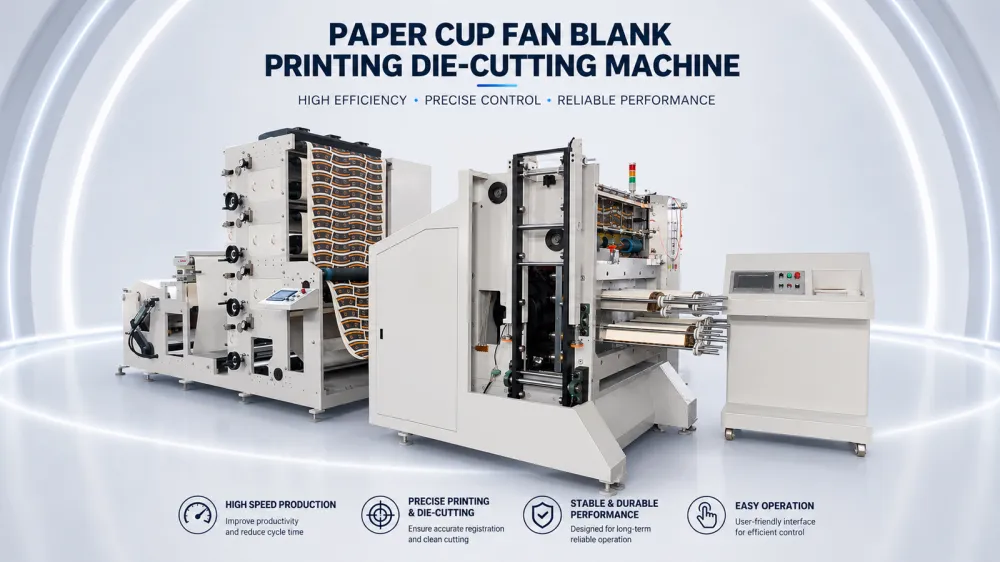
Relevant Flexo Machine for BOPP Label Production
For buyers evaluating a narrow-web roll-to-roll flexo configuration for BOPP and other label materials, the following Henghao machine provides a relevant reference configuration.

Label Flexo Printing Machine for BOPP & Film Labels
The HJZ series is an inline roll-to-roll flexo configuration for label and film printing. The listed models support BOPP, PET, PVC, PP, PE and label materials, with machine configuration selected according to the actual production job.
- Models: HJZ-330B / HJZ-420B
- Color Configuration: 1–9 colors
- Maximum Printing Width: 320 mm / 420 mm
- Maximum Web Width: 330 mm / 430 mm
- Materials: BOPP, PET, PVC, PP, PE and label materials
- Converting: Die-cutting station available in the listed configuration
Important: Use the listed specifications as a machine reference, not as an automatic recommendation for every BOPP job. Final configuration should be confirmed from your material, width, colors, artwork, ink, converting requirements and target production.
What Information Should You Send Before Requesting a Quote?
A more complete RFQ allows the machine supplier to evaluate the required configuration instead of quoting only from the phrase “BOPP label printing machine.”
| Information | Why It Matters |
|---|---|
| Material | Specify BOPP or other substrates you need to print. |
| Film Thickness | Helps evaluate material handling and web-control requirements. |
| Roll / Web Width | Determines the required press width. |
| Finished Label Size | Helps evaluate layout and converting requirements. |
| Artwork & Colors | Determines printing-station and registration requirements. |
| Ink Requirement | Helps determine the appropriate ink and drying / curing configuration. |
| Die Cutting | Clarifies whether finished labels need inline converting. |
| Other Finishing | Specify varnishing, laminating, slitting or other required functions. |
| Finished Roll | Clarifies rewinding and downstream requirements. |
| Typical Job Quantity | Helps evaluate the appropriate production workflow and automation level. |
| Sample / Photo | Helps the supplier understand the actual finished label rather than relying on a general description. |
BOPP Label Printing Machine FAQ
Can Flexographic Printing Be Used on BOPP Film?
Yes, flexographic printing can be used for BOPP film when the press, ink, drying or curing, surface condition and web handling are compatible with the actual material. Confirm the specific BOPP film rather than assuming all BOPP materials will run under identical settings.
Does BOPP Film Always Need Corona Treatment Before Printing?
Not necessarily as an additional inline step. The decision depends on the surface condition and treatment level of the supplied film, storage history, ink system and required adhesion. Check the actual material before deciding whether additional treatment is needed.
Is a BOPP Label Printing Machine the Same as a BOPP Bag Printing Machine?
Not necessarily. BOPP labels and BOPP bags can have different material structures, widths, printing layouts, converting processes and finished-product requirements. Select the press according to the actual product rather than the shared material name.
Can the Same Machine Print PET and PE Labels?
Potentially, yes, if the machine configuration supports the actual materials. PET and PE can require different web-handling, surface, ink and drying conditions, so each important substrate should be evaluated before ordering.
Do I Need Inline Die Cutting for BOPP Labels?
Not for every job. Inline die cutting is relevant when the required workflow includes converting the printed material into die-cut labels. If you only need printed rolls for separate downstream converting, an inline die-cutting station may not be necessary.
Can I Choose a BOPP Label Printer From a Label Sample or Photo?
A sample or photo is a useful starting point, but it is normally not enough to finalize the machine. Also provide the material specification, film thickness, web width, colors, artwork, finished-label dimensions, converting requirements and expected production.
Choose the BOPP Label Press From the Actual Job
The right BOPP label printing machine should be selected from the actual substrate and finished-label requirements—not from the material name or machine price alone.
Start with the BOPP specification, web width, number of colors, artwork, ink and drying requirements, tension control, finished label format and converting process. If the same press will also print PET, PE, PVC or paper labels, include those materials during machine evaluation.
This approach makes it easier to compare flexo press configurations on the factors that affect your real production instead of purchasing unnecessary functions or overlooking critical film-handling requirements.
Share this article: