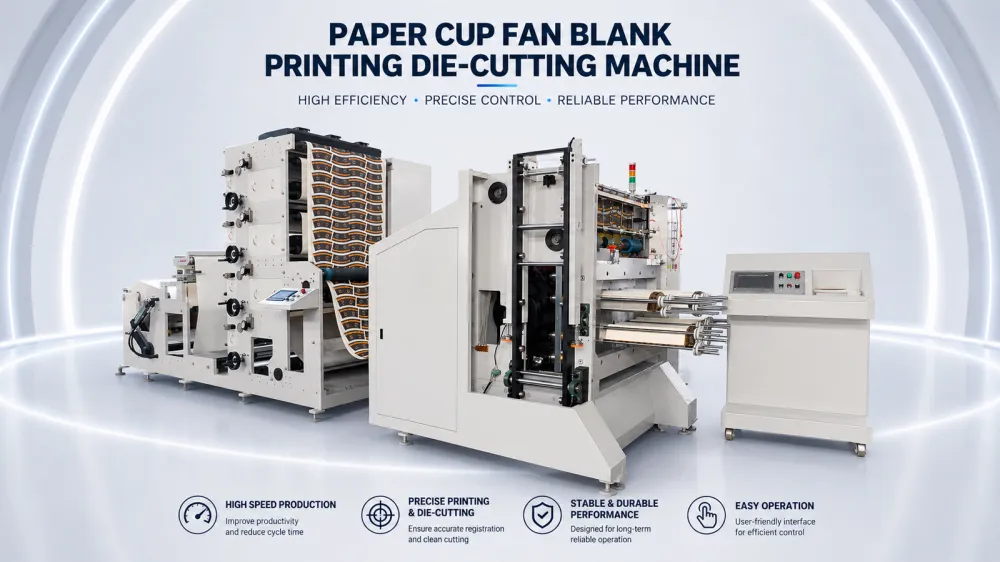
What Is Die-Cutting? A Complete Guide for Custom Labels (2025)
In today's competitive marketplace, a standard square or circle label is no longer enough to make your product stand out on the shelf. You need a solution that instantly captures consumer attention, perfectly conforms to your unique packaging, and accurately communicates your brand's personality. This is precisely where the power of label die-cutting comes into play.
This complete guide, written by industry experts, will break down every aspect of the die-cutting process—from the core technology and key techniques to the strategic advantages it brings to your business. After reading, you will be able to confidently choose the perfect custom label solution for your products.
What is Label Die-Cutting?
In simple terms, label die-cutting is a manufacturing process that uses a custom-shaped tool, known as a "die," to precisely cut label material. It breaks the limitations of traditional label shapes, allowing for the creation of nearly any complex or unique outline imaginable.
Imagine a honey brand with a honeycomb-shaped label, or a children's juice with a label in the shape of a cartoon fruit—these memorable designs are all made possible through die-cutting technology.

The Die-Cutting Process Explained
While the final product can look intricate, the core die-cutting process can be broken down into a few clear steps, making it easy for non-technical stakeholders to understand:
- Design & Proofing: It all begins with your design. You provide the final artwork for the label's shape. Our engineers then review it to ensure its feasibility for physical production.
- Tooling: Based on your approved design, a sharp, precise metal die is manufactured. The outline of this die is an exact match to your desired label shape.
- Cutting (Cutting): The label material (stock), such as paper, vinyl, or film, is fed into a die-cutting machine. The machine applies pressure, causing the die to make a clean cut through the material, creating your custom shape.
- Waste Removal & Finishing: The excess material around the cut labels, known as the "matrix," is stripped away, leaving only the finished labels. Depending on your needs, the labels can be finished on rolls, in sheets, or as individual pieces.
Key Types of Die-Cutting: Which is Right for You?
"Die-cutting" is not a one-size-fits-all technology. It encompasses several methods, each with unique advantages and ideal applications. Understanding the differences is critical for making a cost-effective and high-quality decision.
Rotary Die-Cutting
Rotary die-cutting uses a cylindrical die that cuts the label stock as it rolls continuously through the press.
- Pros: Extremely fast, with very high precision and consistency.
- Cons: The initial cost to create the engraved rotary die is higher.
- Best For: High-volume, long-run production orders. If you need a massive quantity of labels delivered quickly, rotary die-cutting is the superior choice.
Flatbed Die-Cutting
Flatbed die-cutting uses a flat die that is pressed onto the material in an up-and-down motion, similar to a stamp.
- Pros: The tooling cost is significantly lower, and it's highly versatile for handling extremely intricate shapes and thicker materials.
- Cons: The cutting speed is slower than rotary die-cutting.
- Best For: Short-to-medium-sized production runs, pre-launch product samples, or label designs with exceptionally complex details.
Digital Die-Cutting
Digital die-cutting, which includes laser cutting and digital blade cutting, requires no physical die. The machine cuts the material directly based on a digital design file.
- Pros: No tooling costs, incredible flexibility, and the ability to produce ultra-fine details. Perfect for personalization.
- Cons: Slower production speed makes it unsuitable for large volumes, and it has limitations with certain materials.
- Best For: Prototyping, very short runs, or jobs where every single label has a different design.
Don't Forget Kiss Cutting!
You will often hear the term "kiss cutting." How is it different from the "die-cutting" (or through-cutting) we've discussed?
- Die-Cutting (Through-Cutting): The die cuts completely through both the label face stock and the backing liner, producing individual, separate labels.
- Kiss Cutting: The pressure of the die is precisely controlled to cut only through the label face stock, leaving the backing liner intact. The result is a sheet of multiple stickers that can be easily peeled off one by one.
The Strategic Advantages of Die-Cut Labels for Your Business
Investing in custom die-cut labels is more than an aesthetic upgrade; it's a business decision that delivers a tangible return.
- Achieve Brand Differentiation: Among a sea of products, a unique shape can make your product get noticed in under a second, dramatically increasing brand recognition.
- Solve Unique Packaging Challenges: Does your product container have a unique curve or recess? A die-cut label can be engineered to fit your container perfectly, creating a seamless integration between packaging and branding.
- Increase Perceived Product Value: A well-designed, custom-shaped label communicates a message of quality and attention to detail, which can elevate the perceived value of your product and support a premium price point.
How to Choose a Professional Die-Cutting Partner
Selecting the right manufacturer is just as important as selecting the right technology. A professional partner can translate your design vision into a flawless final product. When evaluating potential suppliers, consider these key factors:
- Industry Experience: Have they worked with clients in your industry or with similar applications? Deep experience means they can anticipate potential challenges and provide expert solutions.
- Material Expertise: Can they recommend the most suitable label stock and adhesive for your specific use case (e.g., refrigeration, outdoor exposure, chemical contact)?
- Equipment & Technical Capabilities: Do they operate a range of professional , including both rotary and flatbed models? This ensures they can offer the most cost-effective solution for your specific volume and complexity.
- Quality Control Processes: How do they guarantee that the size, color, and cut of every label in a run remains consistent?
At HengHao, we pride ourselves on having the expert team and advanced equipment to meet all these criteria, making us a trusted partner for your custom label solutions.
> Speak with a Label Expert to Discuss Your Design Concept
Understanding the Costs of Die-Cutting
"Are custom die-cut labels expensive?" This is one of the most common questions we receive. The answer: it depends on several variables. A transparent understanding of these cost drivers will help you better plan your budget.
- Shape Complexity: The more intricate the shape, the more complex and costly the die is to manufacture.
- Order Quantity: For high-volume orders, the unit cost per label becomes extremely low, even with a higher initial tooling cost (especially for rotary dies).
- Material Selection: Different face stocks and adhesives come at different price points.
- Tooling (Die) Charges: The one-time die charge is the primary upfront investment. Flatbed dies are less expensive, while rotary dies cost more but are more economical for large-scale production.
Frequently Asked Questions (FAQ)
Q: How precise is the die-cutting process?
A: Modern die-cutting technology is extremely precise, with tolerances that can be controlled to fractions of a millimeter, ensuring high consistency for your design.
Q: Can I die-cut any material?
A: Almost all pressure-sensitive label materials can be die-cut, including paper, PP, PET, PE, and vinyl. However, the suitability of each technology can vary, and our experts will provide a recommendation.
Q: What is the turnaround time from design to finished product?
A: This depends on the complexity and quantity of the order. After design approval, die manufacturing typically takes a few days. Production time then varies based on the order size. Digital die-cutting eliminates the tooling time.
Share this article: