Inline Flexo Die-Cutting Guide: Boost Efficiency & ROI (2025)
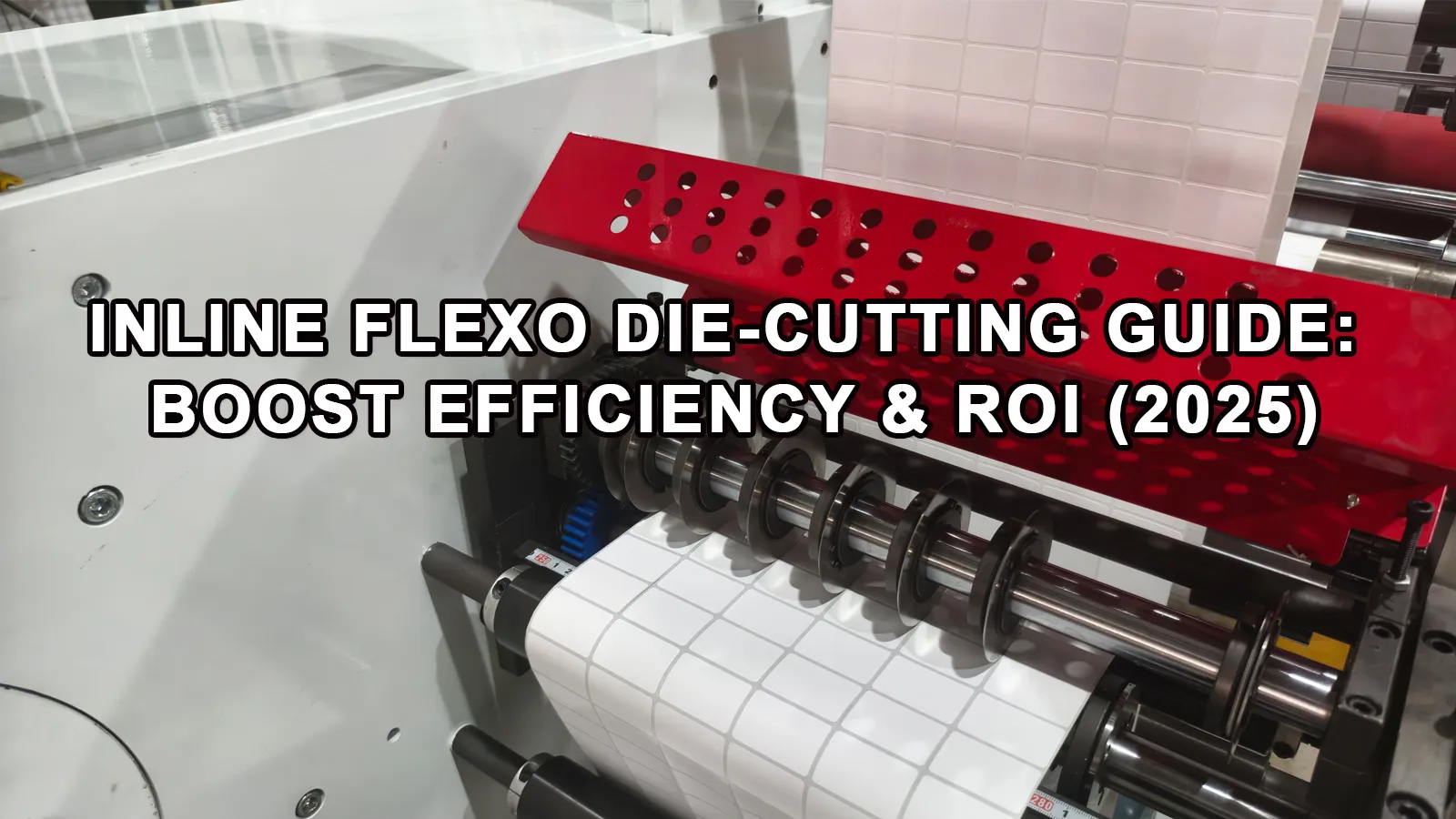
In the competitive world of label and packaging production, efficiency is everything. The traditional, multi-step process of printing, moving materials, and then finishing them on separate machines is quickly being replaced by a more streamlined, profitable approach: inline flexo die-cutting. At its core, this involves integrating a die-cutting unit directly into the press. For a foundational understanding of this crucial step, explore our complete guide: What Is Die-Cutting? A Complete Guide for Custom Labels (2025). By integrating printing and finishing into a single, automated pass, converters can unlock unprecedented levels of speed, accuracy, and cost savings.
This guide is designed for production managers, engineers, and business owners. We'll explore why inline finishing is a game-changer, how to choose the right technology for your needs, and how to maximize your return on investment.
Why Inline Finishing is a Game-Changer for Modern Production
Integrating a die-cutting unit directly into your flexo press transforms your workflow from a series of disconnected steps into a seamless, highly efficient production line. This single-pass system delivers four key advantages that directly impact your bottom line:
- Massively Boosted Speed & Throughput: By eliminating the need to transfer materials between machines, you slash production time. An inline system's continuous operation is ideal for handling high-volume orders and meeting tight deadlines, with modern presses running at speeds of hundreds of feet per minute.
- Significant Operational Cost Reduction: Automation is at the heart of inline finishing. This reduces the need for multiple operators, minimizes manual material handling, and cuts down on setup time between jobs. The result is lower labor costs and higher overall equipment effectiveness (OEE).
- Unmatched Precision and Quality: When the substrate remains on a single, tension-controlled web from printing to cutting, registration between the printed graphic and the die-cut is virtually perfect. This eliminates the risk of misalignment common in offline processes, ensuring consistent, high-quality results for every piece.
- Drastic Reduction in Material Waste: The single-pass process significantly reduces setup scrap generated from multiple machine make-readies. Enhanced precision also minimizes rejects from misregistration, with some studies showing that optimized inline workflows can cut material waste by 10-20%.
Choosing Your Technology: Rotary vs. Semi-Rotary vs. Flatbed
Selecting the right die-cutting technology is critical and depends entirely on your primary applications, run lengths, and materials.
| Feature | Rotary Die-Cutting | Semi-Rotary Die-Cutting | Flatbed Die-Cutting | Laser Die-Cutting |
| Principle | Continuous rotating cylinder | Intermittent web feed, rotating die | Flat "stamping" press | Computer-controlled laser beam |
| Best For |
High-volume, long runs |
Short-to-medium, variable runs |
Thick/rigid materials, short runs |
Ultra-short runs, complex designs |
| Speed |
Very High |
Medium-High |
Low (Intermittent) |
Variable |
| Tooling Cost |
Medium to High (Solid Dies) / Low (Flexible Dies) |
Low (Small Flexible Dies) |
Low (Steel Rule Dies) |
None (Tool-less) |
| Key Application |
Self-adhesive labels, film packaging |
Digital labels, multi-SKU jobs |
Folding cartons, gaskets, heavy paperboard |
Prototypes, security labels, intricate patterns |
- Rotary Die-Cutting: The industry workhorse for high-speed, high-volume production of labels and flexible packaging.
- Semi-Rotary Die-Cutting: Offers exceptional flexibility and low tooling costs, making it perfect for the short and varied runs typical of digital printing. A single, small die can be used for jobs of different lengths, providing a significant cost advantage.
- Flatbed Die-Cutting: Delivers immense pressure, making it the ideal choice for cutting thick, heavy, or rigid materials like paperboard, corrugated stock, and industrial gaskets.
- Laser Die-Cutting: A tool-free, digital technology offering ultimate design freedom. It's perfect for prototyping, highly intricate patterns, and variable data cutting where every piece is unique.
Inline vs. Offline: A Strategic Decision Framework
Choosing between an integrated (inline) or separate (offline) workflow is a critical strategic decision. There is no single right answer—the best choice depends on your business model.
Choose an INLINE workflow if your business focuses on:
- High-Volume, Standardized Jobs: Maximizing speed and efficiency is your top priority.
- Fast Turnaround Times: You need to get products from order to shipment as quickly as possible.
- Reducing Labor Costs: Automation and single-operator control are key objectives.
- Saving Floor Space: You want to combine multiple processes into a single, compact footprint.
Choose an OFFLINE workflow if your business focuses on:
- High-Mix, Low-Volume Orders: Flexibility to quickly change jobs, materials, and dies is crucial.
- Complex or Specialized Finishing: Your jobs require processes that would create a bottleneck on an inline press.
- Maximizing Equipment Utilization: You want your press to run continuously while a separate finishing machine handles setups for different jobs.
- Phased Investment: You prefer to invest in printing and finishing equipment separately over time.
Real-World Applications: From Labels to Pharma-Grade Packaging
Inline flexo die-cutting is a versatile technology that adds value across numerous industries.
- Labels & Flexible Packaging: This is the largest application area. Inline systems excel at producing self-adhesive labels using precise kiss-cutting (cutting the label face without piercing the liner), tamper-evident labels with security features, and multi-layer coupon labels.
- Folding Cartons & E-commerce: For consumer goods and e-commerce packaging, inline systems perform printing, creasing for folds, and window-cutting in a single pass. The same principles of integration apply to other specialized products, where a dedicated Paper Cup Flexo Printing Machine with Punching Inline can streamline the manufacturing of items like beverage containers.
- Medical & Pharmaceutical: This highly regulated sector depends on the precision and consistency of inline production. The process ensures that critical information is perfectly registered on packaging and that die-cut components for blister packs and sterile device packaging meet strict safety and quality standards.
Maximizing Uptime: Essential Maintenance for Your Die-Cutting Unit
A proactive maintenance plan is essential to protect your investment and ensure consistent performance. Implement a simple, tiered schedule for your team.
Daily Checks (Operator Level)
- Clean Tooling: Remove all paper dust, debris, and adhesive residue from dies, magnetic cylinders, and anvil rollers after each shift.
- Inspect Blades: Visually check die blades for nicks, chips, or dullness.
- Check Waste Removal: Ensure waste matrix rewinders and extraction systems are clear and functioning properly.
Weekly & Monthly Tasks (Technician Level)
- Lubricate: Follow the manufacturer's schedule to lubricate all gears, bearings, and moving parts.
- Inspect Anvil: Check the anvil roller for even wear. Rotate or replace anvil covers as needed to maintain a uniform cutting surface.
- Check Fasteners: Tighten any bolts and screws that may have loosened from machine vibration.
Best Practices for Tooling Care
- Proper Handling: Always handle flexible dies carefully to avoid kinks or bends. Use a proper tool, not your hands, to remove them from magnetic cylinders.
- Correct Storage: Store flexible dies flat or on dedicated magnetic racks in a dry environment, preferably in their original anti-rust packaging.
- Log Performance: Track the usage of each die (e.g., total impressions or linear feet) against specific materials. This data helps you move from reactive to predictive maintenance, scheduling die replacements before quality suffers.
The HENGHAO Advantage: Your Partner in Custom Integrated Solutions
Understanding the technology is the first step. The next is implementing a solution tailored to your specific production needs. At HENGHAO Machinery, we are more than just a supplier of ; we are your dedicated partner in building a more efficient and profitable workflow.
Our strength lies in our modular, customizable approach. We work with you to design a production line that fits your exact requirements. Our capabilities include:
- Flexible Integration: We can seamlessly integrate high-speed rotary, flexible semi-rotary, or powerful flatbed die-cutting stations into our multi-color flexo presses.
- Value-Added Modules: Enhance your capabilities in a single pass by adding units for slitting, lamination, cold foil stamping, web cleaning, and more.
- Upgrading Existing Lines: In many cases, we can retrofit a die-cutting unit onto your existing modular press, providing a highly cost-effective path to inline efficiency.
- Intuitive Control: All our systems feature modern touchscreen HMI controls, simplifying job setups and changeovers.
Ready to transform your production process?
Contact the HENGHAO engineering team today for a complimentary workflow analysis and a customized quote. Let's build your future-proof, high-efficiency production solution together.
- Email: [email protected]
- WhatsApp/WeChat: +8613375778885
Share this article: