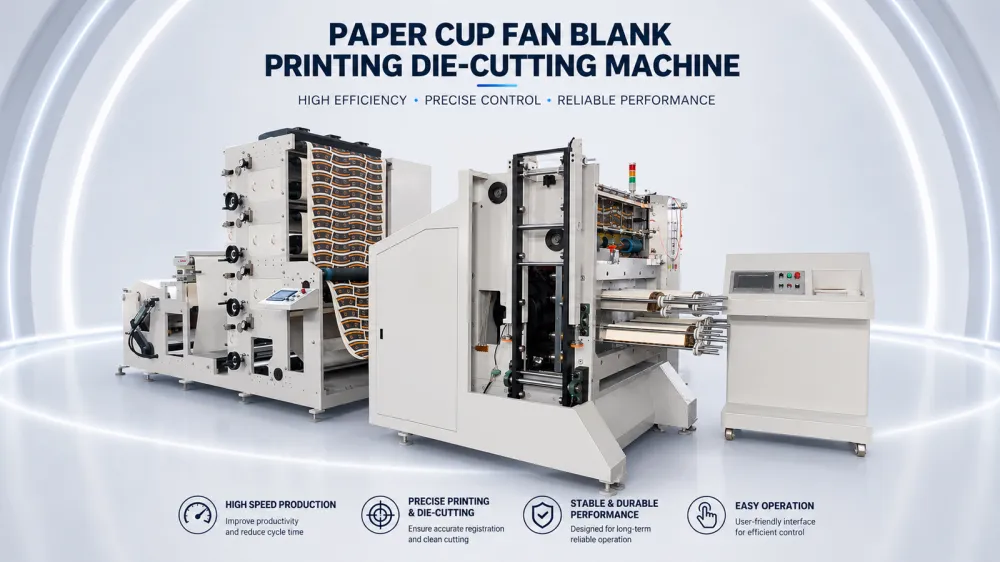
Rotary Die Cutting Process for Label Production
Rotary die cutting is a converting process that uses a rotating cylindrical cutting tool to produce defined shapes in label materials. In pressure-sensitive label production, the die typically cuts through the face material and adhesive while leaving the release liner intact. This allows individual labels to remain positioned on a continuous backing web for waste removal, rewinding and subsequent application.
Rotary die cutting is widely used for printed and unprinted label rolls. Its performance depends on the cutting tool, material construction, web handling and registration control. Understanding these factors helps label converters identify suitable processes and prevent common production defects.
What Is Rotary Die Cutting?
Rotary die cutting uses a cylindrical die that rotates against a supporting surface as label material passes through the cutting station. The cutting edges follow a predetermined pattern, producing repeated label shapes across the web.
The cutting tool may be a flexible die mounted on a magnetic cylinder or a solid engraved die cylinder. The appropriate configuration depends on the material, required geometry, tooling system and production conditions.
Rotary die cutting describes the cutting mechanism, not one fixed machine operating mode. Full-rotary systems generally use continuous rotary motion, while semi-rotary systems coordinate intermittent web movement with the cutting cycle.
The differences in operating modes are explained in our semi-rotary vs full-rotary die cutting guide.
How Does Rotary Die Cutting Work?
A rotary die cutting line feeds label material through a rotating cutting station, separates the required material layers and prepares the finished web for further converting. The sequence varies with the machine configuration, but the main production stages are similar.
- Material unwinding: Printed or unprinted label stock is unwound and fed into the converting line. Web tension and guiding help maintain stable material movement.
- Print registration: For preprinted labels, a registration system aligns the cutting pattern with the printed artwork. Unprinted materials may not require print-to-cut registration.
- Rotary cutting: The material passes between the cutting cylinder and its supporting anvil. The die applies controlled cutting force along the specified label outline.
- Waste matrix removal: In typical kiss-cut label production, the surrounding face-material waste is removed while the finished labels remain attached to the release liner.
- Inspection and finishing: The converted web may undergo inspection, slitting, counting or rewinding before the finished label rolls are delivered.
Not every rotary die cutting machine includes all these operations. Some systems combine cutting, waste removal and rewinding in one line, while others use separate finishing equipment.
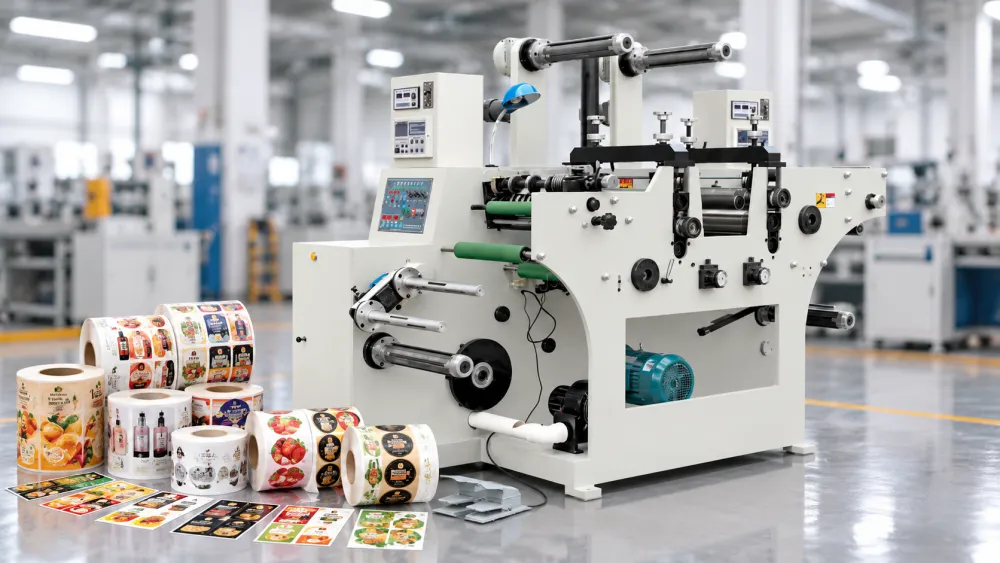
What Are the Main Components of a Rotary Die Cutting System?
The cutting station works together with material feeding, tension control and registration equipment. The following components have the greatest influence on cutting consistency and finished-label quality.
| Component | Main Function | Production Consideration |
|---|---|---|
| Rotary die cylinder | Carries the cutting pattern and applies the cutting action | Tool geometry, wear and alignment affect cut quality |
| Flexible die and magnetic cylinder | Holds a replaceable flexible cutting plate in compatible tooling systems | Die thickness, mounting and cylinder compatibility must match |
| Anvil cylinder | Supports the material opposite the cutting tool | Surface condition and alignment influence cutting consistency |
| Cutting pressure adjustment | Controls the cutting engagement between the tool and supporting surface | Incorrect settings can cause incomplete cuts or liner damage |
| Web guiding and tension control | Maintains stable material tracking through the machine | Unstable web movement can affect registration and waste removal |
| Registration control | Coordinates the cutting position with printed artwork | Sensor response and web stability affect cut-to-print alignment |
| Waste stripping system | Removes the surrounding face-material matrix after kiss cutting | Stripping geometry and waste tension affect label retention |
These components do not operate independently. For example, a correctly manufactured die may still produce inconsistent results if web tension fluctuates or the supporting cylinder is misaligned. Production checks should therefore consider the complete cutting system rather than the die alone.
How Does Rotary Kiss Cutting Work on Label Rolls?
Rotary kiss cutting separates the label face material and adhesive while keeping the release liner intact. The rotating die follows the required label outline, allowing the finished labels to remain on a continuous backing web for matrix removal and rewinding.
A typical pressure-sensitive label construction includes four functional layers:
- Face stock: The printable paper or film that forms the visible label.
- Adhesive: The bonding layer that attaches the finished label to its application surface.
- Release coating: The surface treatment that allows the adhesive label to separate from its backing.
- Release liner: The supporting paper or film that carries the labels through converting and application.
The cutting tool must penetrate the face stock and adhesive without significantly damaging the release liner. If the cut is too shallow, labels may remain connected to the surrounding waste. If it is too deep, the liner may become scored or weakened.
Successful kiss cutting therefore depends on the complete material construction, die condition, cutting engagement and consistency across the web. The correct setup should be confirmed using the actual label stock rather than a nominal material thickness alone.
Which Label Materials Can Be Rotary Die Cut?
Rotary die cutting can process many paper-based and film-based label materials, provided the cutting tool and machine configuration are suitable. Material compatibility depends on more than the face-stock name: adhesive properties, liner strength, total thickness and material stability also affect cutting performance.
| Label Material | Typical Applications | Key Cutting Considerations |
|---|---|---|
| Coated paper | Food packaging, retail products and general-purpose labels | Clean edge formation, adhesive separation and consistent cutting depth |
| Polypropylene (PP) | Beverage, cosmetic and household product labels | Film stiffness, adhesive behavior and stable web handling |
| Polyethylene (PE) | Squeeze bottles and flexible packaging containers | Film flexibility, stretching and dimensional stability during cutting |
| Polyester (PET) | Durable labels, identification labels and industrial applications | Tool suitability, material toughness and complete face-material separation |
| Specialty laminated materials | Protective, functional and multilayer labels | Combined layer thickness, cutting resistance and liner compatibility |
Two label stocks made from the same face material may require different cutting settings because their adhesives, liners or thicknesses differ. Before running an unfamiliar construction, converters should test the material for clean separation, liner integrity and stable waste removal.
What Affects Rotary Die Cutting Accuracy?
Rotary die cutting accuracy depends on the combined stability of the cutting tool, material web, registration system and cutting conditions. A correctly manufactured die cannot compensate for unstable web tension, material distortion or inconsistent cutting engagement.
| Factor | Effect on Label Quality | Recommended Check |
|---|---|---|
| Die condition and alignment | Worn or incorrectly mounted tooling may cause uneven cuts or incomplete separation. | Inspect cutting edges, die mounting and cylinder alignment. |
| Cutting engagement | Insufficient engagement may leave uncut areas; excessive engagement may damage the liner. | Check cut consistency across the web and inspect the backing after cutting. |
| Web tension | Tension fluctuations may change material tracking and cut-to-print alignment. | Review tension settings and web movement during acceleration and steady production. |
| Print registration | Incorrect synchronization may shift the cut outline relative to the printed artwork. | Check registration marks, sensor operation and repeat consistency. |
| Material variation | Changes in thickness, stiffness or adhesive behavior may affect cutting depth and waste removal. | Compare incoming material batches and verify the complete label construction. |
| Operating conditions | Changes in speed or web handling may expose instability that is not visible during initial setup. | Inspect samples under the intended production conditions, not only at low setup speed. |
Cutting quality should be evaluated using both the finished label and its backing. A label may appear correctly shaped but still contain adhesive bridges, liner scoring or registration errors that affect downstream processing.
When setting production tolerances, converters should distinguish between cut-to-print registration, finished-label dimensions and cutting-depth consistency. These are separate quality requirements and should be verified against the actual job specification.
Common Rotary Die Cutting Problems and Solutions
Rotary die cutting defects can originate from tooling, material properties, cutting engagement, registration or waste handling. The most effective troubleshooting approach is to identify the visible defect first, then check the relevant process conditions before changing machine settings.
| Production Problem | Possible Causes | Recommended First Check |
|---|---|---|
| Incomplete label cutting | Insufficient cutting engagement, worn tooling or material thickness variation | Inspect uncut areas, die condition and cutting consistency across the web |
| Release liner scoring or breakage | Excessive cutting penetration, uneven engagement or unsuitable liner construction | Examine the liner beneath the cut and verify tooling alignment |
| Cut-to-print misregistration | Registration sensor problems, web tension fluctuations or unstable material tracking | Check print marks, sensor response and whether the error is constant or intermittent |
| Labels lifting during matrix stripping | Incomplete cuts, adhesive bridging or unsuitable stripping conditions | Inspect cut separation before checking waste tension and stripping geometry |
| Uneven cutting across the web | Die mounting errors, cylinder misalignment or inconsistent cutting engagement | Compare cut quality at the left, center and right positions |
| Rough or distorted label edges | Tool wear, unsuitable die geometry or material deformation | Inspect the cutting edges and compare samples under stable operating conditions |
Operators should avoid increasing cutting pressure as a universal remedy. Additional pressure may improve an incomplete cut but can also damage the liner or accelerate tooling wear. Mechanical inspection and adjustment should follow the machine manufacturer's safety and maintenance procedures.
Where Does Rotary Die Cutting Fit in a Label Production Line?
Rotary die cutting can be integrated into a printing and converting line or performed on separate finishing equipment. The choice depends on production scheduling, printed-web quality, job changes and the required finishing operations.
| Production Arrangement | How It Works | When It May Be Suitable |
|---|---|---|
| Inline rotary die cutting | Printing and die cutting operate within a coordinated production line. | When printing and cutting requirements can be matched within one workflow |
| Offline rotary die cutting | Preprinted or unprinted rolls are processed on separate converting equipment. | When finishing needs independent scheduling, inspection or job changeovers |
| Rotary die cutting with slitting and rewinding | The cut web undergoes additional finishing before collection into finished rolls. | When customers require specific roll widths, winding formats or downstream labeling compatibility |
As one equipment example, Henghao's intermittent rotary die cutting machine supports semi-rotary and full-rotary operation, with integrated waste removal, slitting and rewinding functions. Its configuration illustrates how several finishing operations can be combined within one converting system.
The most suitable arrangement should be determined by the actual label stock, cutting repeat, finished-roll specifications and required production output rather than the cutting method alone.
Rotary Die Cutting: Frequently Asked Questions
Can Rotary Die Cutting Produce Labels with Complex Shapes?
Yes, within the limits of the tooling and material. Rotary dies can produce custom contours, rounded corners and irregular label outlines. Very narrow features, sharp internal corners or closely spaced cuts may require additional tooling review. A sample trial helps confirm whether the shape can be produced consistently.
Does Every Label Size Require a New Rotary Die?
Not always. Tooling requirements depend on the machine's operating mode, die design and available cutting repeat. Some semi-rotary configurations accommodate different repeat lengths using a compatible magnetic cylinder and replacement flexible dies. Full-rotary jobs may require a different cylinder and die combination.
Can Rotary Die Cutting Be Used for Unprinted Labels?
Yes. Rotary die cutting can process unprinted label stock when the material and tooling are compatible. Unlike preprinted labels, blank material generally does not require print-to-cut registration, although stable web feeding and consistent cutting remain essential.
How Often Should a Rotary Die Be Replaced?
There is no universal replacement interval. Die life depends on cutting-edge construction, material abrasiveness, operating conditions, maintenance and production volume. Replacement or servicing should be based on inspection results and recurring cutting defects rather than a fixed number of operating hours.
Can Rotary Die Cutting Be Combined with Label Inspection?
Yes, if the production line includes compatible inspection equipment. Inspection may be performed before or after cutting, depending on the defects that need to be detected. Print inspection, cut-to-print registration checks and finished-roll inspection serve different purposes and should not be treated as interchangeable.
Final Considerations for Rotary Label Die Cutting
Rotary die cutting is an established process for converting paper and film label materials into defined shapes. Reliable production depends on matching the cutting tool, material construction, registration control and finishing arrangement to the actual job.
For converters planning a new process or reviewing existing equipment, the useful starting point is a complete label specification: material layers, cutting outline, repeat length, required finished format and acceptable quality limits. These details can then be used to evaluate suitable label die cutting machines and converting configurations.
Share this article: