Author:
Mickey
Source: HENGHAO Machinery
Updated: 2026-10-10
Wristband Die Cutting Machine: Tyvek & Paper Buyer's Guide
What Should You Check Before Buying a Wristband Die Cutting Machine?
Choosing a wristband die cutting machine starts with the wristband material, finished dimensions, cutting layout, registration requirements and target output. A suitable machine must cut the required wristband shape consistently without damaging the material or creating excessive production waste.
For Tyvek, coated paper and synthetic wristbands, buyers should compare usable web width, cutting accuracy, tooling compatibility, material feeding and downstream finishing requirements before selecting a machine.
Buyer Checklist: Material Type → Wristband Size → Cutting Layout → Registration Accuracy → Stable Output → Finishing Requirements
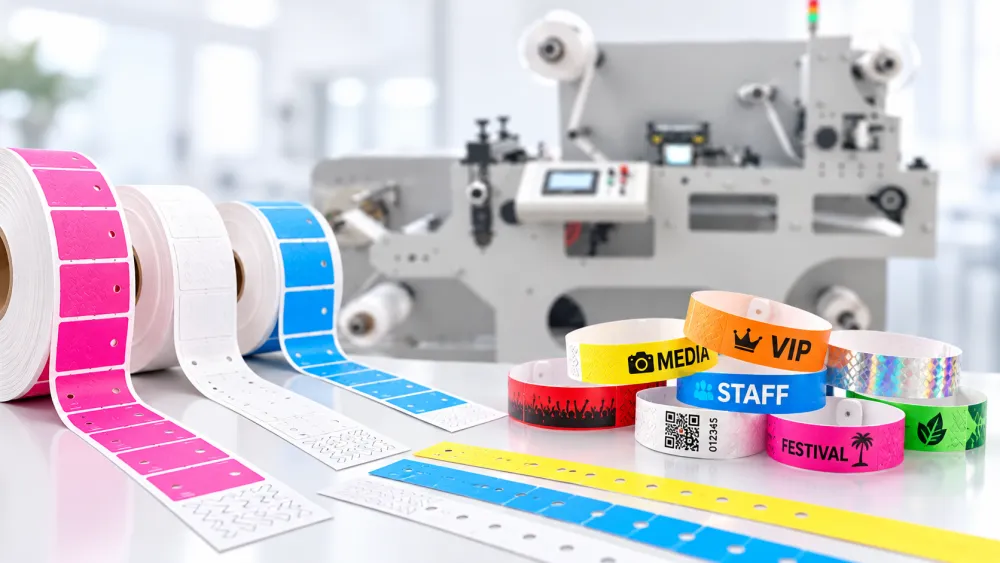
Which Wristband Materials Can Be Die Cut?
Different wristband materials require different cutting and handling conditions. A machine suitable for one material should not automatically be assumed to deliver the same results on every substrate.
|
Material |
Typical Application |
Cutting Consideration |
|
Tyvek |
Event admission and identification wristbands |
Clean cutting, tear-resistant material handling and accurate wristband profiles |
|
Coated Paper |
Promotional and short-term identification wristbands |
Edge quality, registration and prevention of material damage |
|
Synthetic Paper |
Durable identification wristbands |
Tooling suitability, feeding stability and consistent cutting |
|
PET Film |
Selected specialty wristband applications |
Film thickness, cutting force and tension control |
Always provide the supplier with actual material samples, thickness and construction details when testing a new wristband application.
How to Match Web Width With Wristband Layout
Machine web width determines the available material width, but it does not directly indicate how many finished wristbands can be produced in one cutting cycle.
The number of wristbands across the web depends on their orientation, dimensions, spacing, side margins and die design.
Usable Web Width = Material Width − Total Side Margins The cutting layout must fit within the usable width while allowing the required spacing and registration features.
For example, a 300 mm material web with 10 mm margins on each side provides 280 mm of usable width. The actual number of wristbands that fit depends on the approved die layout.
Buyers should request a layout drawing showing the wristband shape, cut lines, holes, perforations and waste areas before confirming the machine configuration.
How to Calculate Actual Wristband Production Output
Machine speed in meters per minute is not the same as finished wristbands per minute. Production output also depends on cutting repeat length, the number of wristbands per repeat, operating availability and saleable yield.
Theoretical Bands/min = Web Speed (mm/min) ÷ Repeat Length (mm) × Bands per Repeat Estimated Saleable Bands/min = Theoretical Bands/min × Availability × Saleable Yield
Example: Calculating Wristband Output
Stable Web Speed 24 m/min
Cutting Repeat 250 mm
Bands per Repeat 4
Theoretical Output 384/min
Calculation: 24,000 ÷ 250 × 4 = 384 wristbands/min.
If operating availability is 90% and saleable yield is 98%, estimated saleable output is approximately 339 wristbands/min, or 20,322 wristbands/hour.
These figures are illustrative, not guaranteed output for any particular machine. Actual production must be confirmed through material trials, approved tooling and stable operating conditions.
What Affects Wristband Die-Cutting Accuracy?
Accurate die cutting is especially important when wristbands include printed logos, identification fields, locking holes, perforations or adhesive closure areas.
|
Factor |
Why It Matters |
|
Registration Control |
Helps maintain cutting alignment with printed artwork or positioning marks. |
|
Web Tension |
Reduces feeding variation and material movement during cutting. |
|
Die Tooling |
Determines the wristband profile, perforations and cutting quality. |
|
Material Properties |
Thickness, stiffness and tear resistance influence cutting performance. |
|
Stable Operating Speed |
Supports consistent registration and finished-product quality. |
When comparing machine specifications, confirm how positioning accuracy is measured and whether the quoted tolerance applies under the intended production conditions.
Common Wristband Die-Cutting Problems
Many cutting defects are related to tooling, material feeding or setup conditions rather than maximum machine speed.
|
Problem |
Possible Causes |
What to Check |
|
Cutting Misalignment |
Registration variation or unstable feeding |
Registration marks, web tension and feed settings |
|
Incomplete Cutting |
Unsuitable cutting pressure or worn tooling |
Die condition, material thickness and cutting setup |
|
Rough Edges |
Tool wear or unsuitable die geometry |
Blade condition and material compatibility |
|
Material Wrinkling |
Feeding or tension imbalance |
Unwinding, guiding and web handling |
|
Excessive Waste |
Inefficient layout or repeated setup rejects |
Die layout, changeover procedure and quality records |
For repeat orders, recording the approved die configuration and material settings can reduce unnecessary trial runs and setup waste.
Standalone Die Cutter or Complete Wristband Production Line?
The right equipment configuration depends on which production stages are already available in your factory.
|
Production Requirement |
Equipment Approach |
|
Convert pre-printed wristband rolls |
Consider a standalone wristband die-cutting solution. |
|
Print custom wristband artwork |
Evaluate a compatible printing process before die cutting. |
|
Add variable numbers or barcodes |
Assess a suitable variable-data printing stage and verification requirements. |
|
Produce adhesive-closure wristbands |
Confirm whether separate adhesive application or finishing equipment is required. |
|
Deliver individually packed wristbands |
Plan downstream separation, inspection and packaging operations. |
A die-cutting machine should not be assumed to include printing, numbering, adhesive application or automatic packaging unless these functions are explicitly included in the proposed configuration.
Machine Reference: HMQ-320YW-U Wristband Die Cutter
Henghao Machinery offers the HMQ-320YW-U as a wristband die-cutting equipment option. Its published specifications provide a useful starting point for buyers evaluating web width, cutting speed and registration requirements.
|
Specification |
Published Value |
|
Machine Model |
HMQ-320YW-U |
|
Maximum Material Width |
320 mm |
|
Die-Cutting Speed |
30 m/min |
|
Positioning Accuracy |
±0.15 mm |
|
Maximum Unwinding Diameter |
600 mm |
|
Total Power |
10 kW |
Review the HMQ-320YW-U Wristband Making Machine for the published equipment details. Final suitability should be confirmed using your actual wristband samples, tooling layout and production requirements.
Specification Note: The published 30 m/min die-cutting speed is not a guaranteed finished-wristband output rate. Finished quantity depends on layout, repeat length, stable speed and production yield.
What Information Should You Send When Requesting a Quote?
A complete request for quotation helps the machine supplier evaluate tooling, material handling and the required production workflow.
-
Wristband Material: Tyvek, coated paper, synthetic paper, PET or other substrate.
-
Material Specifications: Thickness, grammage, roll width and roll diameter.
-
Finished Wristband Size: Length, width and shape drawing.
-
Cutting Details: Holes, perforations, tabs, locking features and special profiles.
-
Printing Status: Pre-printed material or additional printing required.
-
Production Target: Required saleable wristbands per hour or shift.
-
Finishing Requirements: Adhesive closure, numbering, inspection, separation or packaging.
-
Samples: Actual material and finished wristband samples, where available.
Wristband Die Cutting FAQ
Can One Die Be Used for Different Wristband Sizes?
Usually, different finished profiles or dimensions require corresponding tooling. Some designs may share compatible features, but tooling reuse must be confirmed from the actual drawings.
Can Wristbands Be Cut From Pre-Printed Rolls?
Yes, provided the machine configuration supports the required feeding and registration method. Printed registration marks, repeat length and artwork positioning should be checked during testing.
Does Higher Cutting Speed Always Reduce Production Cost?
No. Higher speed is beneficial only when stable cutting quality and acceptable waste levels are maintained. Setup time, tooling cost and saleable output also affect unit production cost.
Are Tyvek Wristbands Always Made Using the Same Die Design?
No. Event, identification and specialty wristbands may use different lengths, closure shapes, perforations or security features. The die design must match the finished product.
What Should Be Checked During a Machine Acceptance Test?
Use approved material and tooling to verify finished dimensions, cutting quality, registration, stable output and waste. Record the test conditions and acceptance criteria before final approval.
Choose a Wristband Die Cutter Based on Finished-Product Requirements
The best wristband die cutting machine is not necessarily the machine with the highest published speed. Buyers should prioritize material compatibility, accurate cutting, efficient layout, stable production and the finishing functions required by their wristband products.
Before purchasing, confirm the wristband design, material specifications, cutting tooling and expected saleable output. These details provide a more reliable basis for machine selection and quotation comparison.
Share this article: