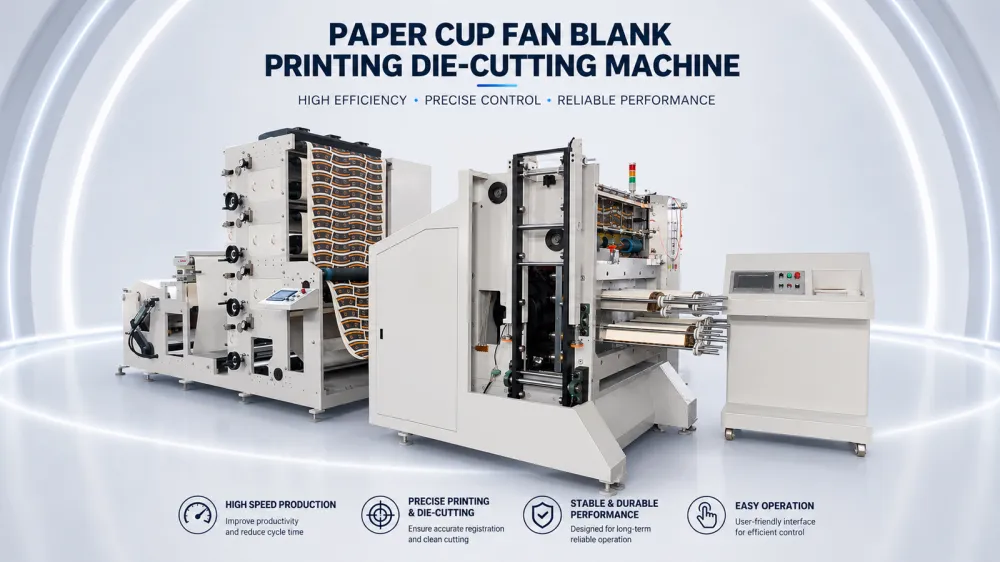
Can One Flexo Press Print Multiple Materials?
Yes, a single flexographic printing press can print multiple materials, provided the machine is configured to handle their different properties. Paper, self-adhesive label stock and selected plastic films can often be processed on the same flexo press, but switching between them may require changes to web tension, ink, drying, printing pressure and other settings.
For packaging manufacturers and label converters, multi-substrate capability can improve equipment utilization and expand the range of orders one production line can accept. However, buyers should verify actual material compatibility rather than assume that every flexo press can print every substrate.
Can One Flexo Press Print Different Materials?
Yes, if the materials fall within the press's mechanical and printing capabilities. A suitably configured flexographic press may process different substrates across separate production runs without requiring a completely different printing machine for each material.
Compatibility depends on several interconnected systems:
- Web handling: The unwind, transport and rewind systems must accommodate the material's thickness, stiffness and stretch characteristics.
- Tension control: The press must maintain stable tension without stretching thin films or causing registration problems.
- Ink compatibility: The ink system must suit the substrate surface and the required printing application.
- Drying or curing: The installed system must adequately dry or cure the selected ink without damaging heat-sensitive materials.
- Printing control: Impression pressure, anilox selection and registration settings must be appropriate for the material.
Multi-substrate printing does not mean printing different independent material rolls simultaneously. In this context, it means changing from one substrate to another between production jobs while using the same press.
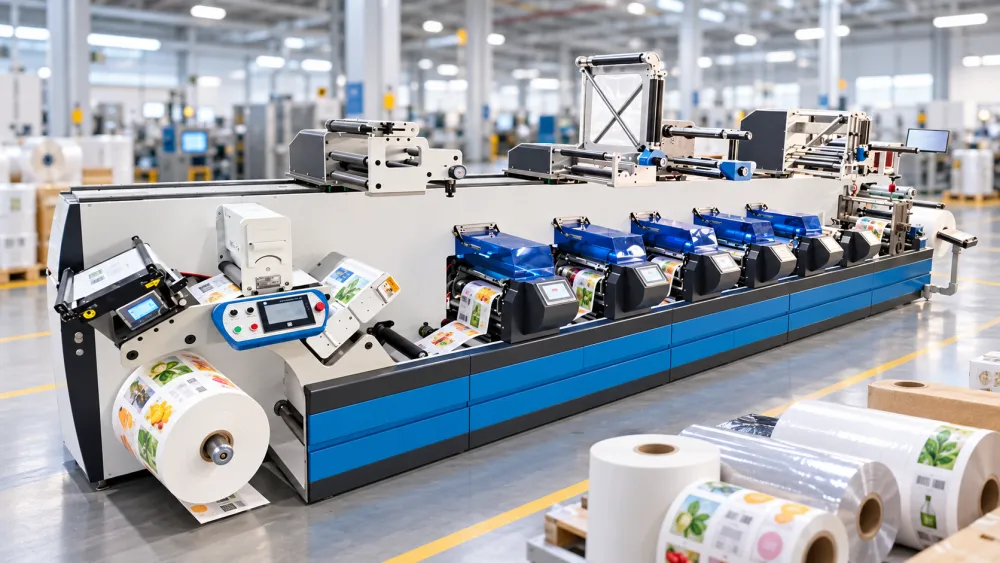
Which Materials Can Share the Same Flexo Press?
Flexographic printing is used on paper, paperboard, label materials and various flexible films. However, the materials that one specific press can handle depend on its design, working width, tension range, ink system and drying configuration.
| Substrate | Typical Applications | Key Compatibility Checks |
|---|---|---|
| Coated and Uncoated Paper | Paper packaging, wrapping paper and printed paper products. | Ink absorption, surface smoothness, drying and web tension. |
| Self-Adhesive Label Stock | Product labels, logistics labels and packaging labels. | Facestock, liner stability, ink adhesion and downstream die cutting. |
| BOPP Film | Flexible packaging and film labels. | Surface treatment, ink adhesion, tension and drying. |
| PE Film | Flexible packaging, bags and wrapping films. | Film stretch, low-tension handling, heat sensitivity and ink adhesion. |
| PET Film | Flexible packaging and printed film structures. | Surface condition, ink compatibility, registration and drying. |
| Paperboard | Cartons, sleeves and other paperboard packaging. | Material thickness, stiffness, feeding capability and machine configuration. |
Important: This table describes potential flexographic printing applications, not a guarantee that one press can process every listed material. For example, a narrow-web label press may accommodate several label facestocks but may not be suitable for thick paperboard or wide flexible-packaging films.
For a broader explanation of substrate characteristics and typical applications, see our flexo printing materials guide .
What Must Change When Switching Substrates?
Switching substrates on a flexo press usually requires more than changing the material roll. Operators must check web tension, ink compatibility, drying conditions, printing pressure and registration. The required adjustments depend on the properties of both the previous and the new substrate.
| Press Setting | Why Adjustment May Be Needed | What to Check |
|---|---|---|
| Web Tension | Materials differ in stiffness, thickness and stretch behavior. | Unwind, infeed, printing zones and rewind tension. |
| Ink System | Paper and non-porous films have different ink adhesion requirements. | Ink chemistry, viscosity and substrate compatibility. |
| Surface Treatment | Some films require suitable surface treatment for reliable ink wetting and adhesion. | Surface condition, treatment level and adhesion test results. |
| Drying or Curing | Ink systems and substrates have different drying and heat limits. | Airflow, temperature, exposure and curing performance. |
| Printing Pressure | Material thickness and surface properties influence ink transfer. | Plate impression, anilox contact and print defects. |
| Registration | Stretch and dimensional changes can affect color-to-color alignment. | Register stability at the intended production speed. |
| Rewinding | Finished rolls require suitable tension and winding conditions. | Roll hardness, telescoping, wrinkles and blocking. |
Ink Adhesion and Surface Treatment
Non-porous films such as BOPP, PE and PET generally require inks formulated for the specific substrate and end-use application. Some film grades also need corona treatment or another suitable surface preparation process.
Surface treatment alone does not guarantee successful printing. Buyers should confirm ink adhesion on actual production material, including any required resistance to rubbing, lamination or downstream converting.
Drying and Temperature Control
Drying requirements change with the ink system, coating weight, substrate and operating speed. Thin or heat-sensitive films may require tighter temperature control than many paper substrates.
Water-based, solvent-based and UV-curable inks use different drying or curing approaches. A press equipped for one ink system cannot automatically operate another without the necessary compatible equipment and safety provisions.
For a more detailed comparison, see our guide to flexo ink drying and curing.
Paper-to-Film vs Film-to-Film Changeovers
Changing from paper to plastic film often requires broader adjustments than changing between two similar film grades. However, the actual difficulty depends on material specifications, ink systems and press configuration.
| Substrate Change | Main Challenges | Priority Checks |
|---|---|---|
| Coated Paper to BOPP | Ink adhesion, surface energy and tension differences. | Ink formulation, surface treatment, drying and registration. |
| BOPP to PE Film | Different stretch behavior and sensitivity to heat. | Low-tension handling, drying temperature and web stability. |
| PE to PET Film | Changes in stiffness, dimensional behavior and surface condition. | Tension settings, impression and ink adhesion. |
| Paper Labels to Film Labels | Different facestock properties and possible changes in ink requirements. | Label construction, tension, drying and finishing compatibility. |
| Uncoated Paper to Coated Paper | Differences in absorbency and surface smoothness. | Ink transfer, anilox selection and drying. |
For example, a press running uncoated paper with water-based ink may need a different ink formulation and drying configuration before printing a non-porous packaging film. Whether that change is practical depends on the installed equipment.
Similarly, switching from BOPP to a more extensible PE film may require lower web tension and careful control of drying heat to maintain registration and avoid distortion.
Practical takeaway: Substrate changeover time should be evaluated alongside print quality. A machine that can technically print several materials may still be inefficient if each change requires extensive cleaning, tooling adjustments or additional setup.
When Is One Flexo Press Not Enough?
A single flexographic press cannot necessarily cover every material and product specification. Some requirements exceed the machine's mechanical limits or need specialized printing and converting equipment.
Common limitations include:
- Working width: A narrow-web label press may not accommodate the width required for flexible packaging production.
- Material thickness and stiffness: Equipment designed for thin flexible webs may not feed or transport thick paperboard reliably.
- Tension range: A press may lack the low-tension control needed for highly extensible films or the handling capability required for heavier materials.
- Drying capacity: The installed drying or curing system may not support the required ink, coating weight or production speed.
- Ink system compatibility: Switching between different ink chemistries may require additional components, cleaning procedures and safety measures.
- Printing and finishing requirements: Specialized coating, lamination, die cutting or other converting operations may require additional equipment.
Buyers should also distinguish between substrate compatibility and commercially practical production. A press may produce acceptable samples on a particular material but fail to maintain the required quality, speed or waste rate during continuous operation.
If planned orders involve substantially different web widths, material constructions or drying requirements, comparing separate press configurations may be more practical than attempting to cover every application with one machine.
How to Test Multi-Substrate Printing Before Buying
The most reliable way to confirm multi-substrate capability is to test the intended materials under realistic production conditions. A successful sample at low speed does not necessarily prove that the press can maintain stable quality during continuous production.
Before purchasing, buyers should request a printing trial using representative substrates, artwork and ink requirements.
| Test Item | What to Verify |
|---|---|
| Substrate Handling | Stable unwinding, web transport and rewinding without excessive stretching, wrinkles or tracking problems. |
| Print Registration | Consistent color-to-color alignment at the intended production speed. |
| Ink Adhesion | Adhesion on each actual substrate using an agreed test method and acceptance criteria. |
| Drying or Curing | Adequate drying or curing without blocking, residual tack or unacceptable material distortion. |
| Print Quality | Acceptable solid coverage, fine details, color consistency and surface appearance. |
| Changeover Time | Time required for material replacement, ink changes, adjustments and acceptable restart quality. |
| Production Stability | Saleable output, material waste and print consistency during a representative production run. |
Buyers should define acceptance criteria before the trial, including the required print quality, production speed and acceptable waste level. Test results should be recorded separately for each substrate rather than relying on a single overall machine-speed figure.
What to Tell Your Flexo Press Supplier
A multi-substrate flexo press quotation should be based on the complete range of materials you intend to print. Providing only the maximum web width and number of printing colors is usually insufficient for accurate equipment selection.
Include the following information in your request for quotation (RFQ):
- Substrate types: Specify the actual paper grades, label constructions and plastic film types, such as BOPP, PE or PET.
- Material specifications: Provide thickness or GSM, coating details, roll width and maximum roll diameter.
- Printing requirements: State the number of colors, artwork characteristics, registration tolerance and expected print quality.
- Ink requirements: Identify preferred ink systems and any end-use requirements, including lamination or applicable packaging regulations.
- Production targets: Provide the expected operating speed, order quantities and production hours.
- Changeover frequency: Explain how often the factory will switch between materials, designs and ink systems.
- Finishing operations: Identify any required die cutting, slitting, sheeting, coating or rewinding functions.
- Material samples: Supply representative substrates for testing whenever practical.
Ask the supplier to identify which materials are supported by the proposed standard configuration, which require optional equipment and which fall outside the machine's recommended operating range.
Buyers comparing different press structures can review available flexo printing machines and request confirmation of the specifications relevant to their actual substrates.
Multi-Substrate Flexo Printing FAQ
Can One Flexo Press Use Both Water-Based and UV Inks?
Potentially, but only when the press has compatible ink-handling, drying or curing equipment and appropriate safety provisions. Changing ink chemistry may require additional components and cleaning procedures. It should not be assumed that every flexo press supports both systems.
Can a Flexo Press Print Both Sides of Different Materials?
Yes, if the machine has a suitable web-turning or double-sided printing arrangement. Substrate compatibility and the required ink drying or curing conditions must still be verified for both printed surfaces.
Does Printing Multiple Materials Require Different Printing Plates?
Not always. Plate requirements depend on the artwork, printing repeat, plate specifications and print conditions. However, changing substrate or ink systems may require adjustments to plate selection, anilox configuration or printing pressure to maintain quality.
Can One Flexo Press Print Paper and Plastic Film at the Same Speed?
Sometimes, but identical operating speeds cannot be guaranteed. The practical speed for each material depends on web stability, ink transfer, drying or curing capacity and the required print quality. Buyers should compare tested production speeds for each substrate.
Share this article: